
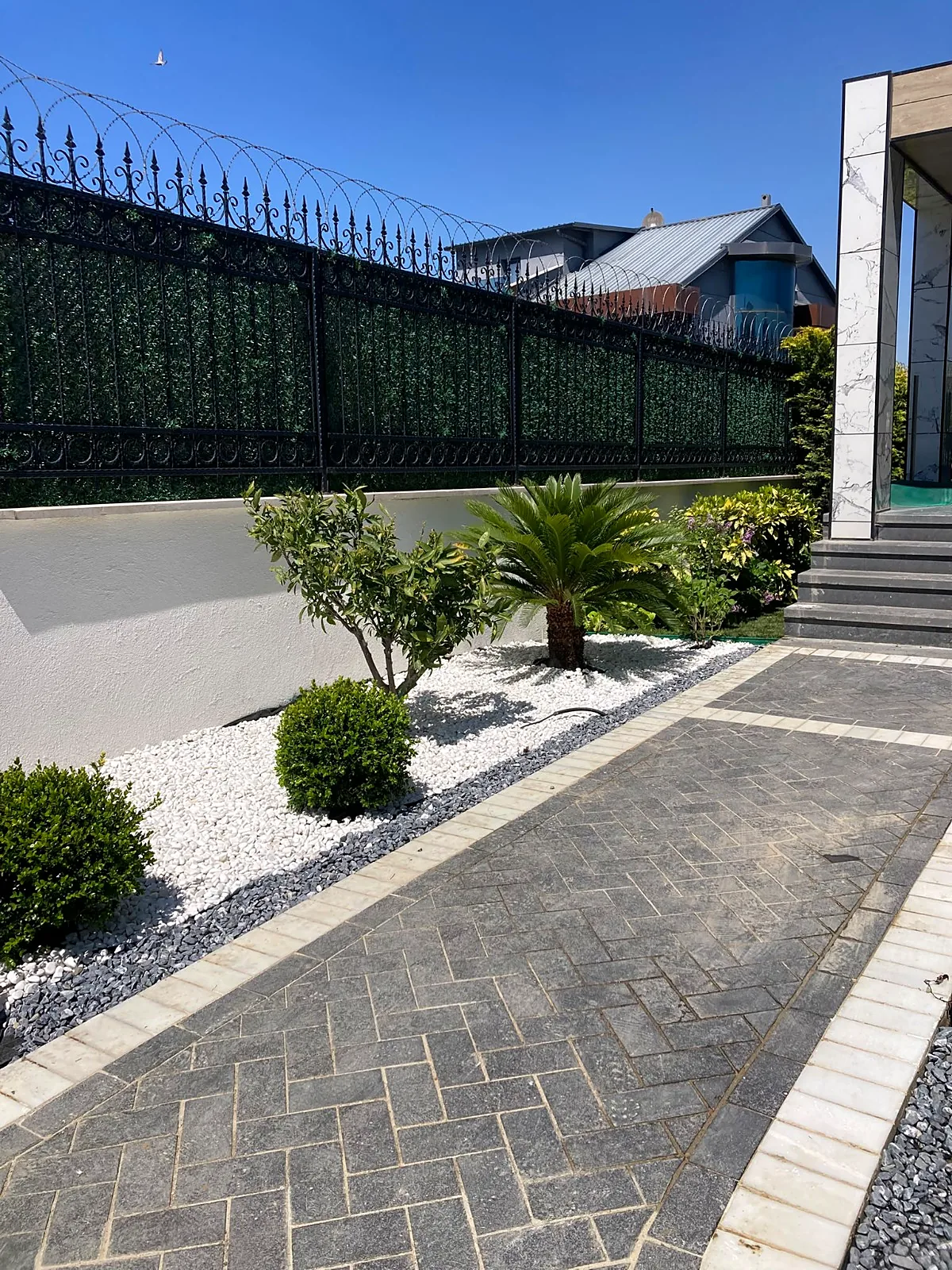
What is a low-water garden?
Summers in the Marmara region are hot and dry, winters mild and wet. A low-water garden is one whose plants, once rooted, get through summer drought with little help. It does not mean a garden that is never watered; water matters most in the first years.
Which plants need little water?
Mediterranean species suit the job: lavender, rosemary, olive, bay laurel, juniper, ornamental grasses and succulents. Most of them like full sun and well-drained soil, and lose their roots in soil that stays wet.
The 'water need' filter in the catalogue lists the low-water plants separately.
How should the soil be prepared?
Cultivate deeply before planting. In heavy clay, add sand and organic matter so that water does not stand. The aim is soil that holds water through summer drought and lets surplus drain away in winter.
If water collects at the bottom of the planting hole, even a hardy plant will rot over winter.
Why do mulch and watering habits matter?
A few centimetres of bark, gravel or wood chips around the plants reduces evaporation, shields the root zone from heat and suppresses weeds.
Drip irrigation delivers water to the root zone and loses less than sprinklers. Watering early in the morning, rarely but deeply, encourages roots to go down.
Why is watering in the first years a separate task?
Even a hardy plant needs water until it has rooted after planting. Depending on the species this can take a year or two. Deep watering once or twice a week through the first summer lets you water far less in later years.
If the roots have not gone deep, the plant struggles in the first heatwave. A 'plant it and forget it' approach is the most common mistake in low-water gardens.
How should plants be grouped?
Place plants with similar water needs together. If lavender and hydrangea share one drip line, one goes thirsty and the other gets too much. Put sun-loving plants on the south or west side and shade-lovers on the north face of the building.
This layout makes both watering and upkeep easier and gives the garden coherence.
What reduces upkeep the most?
Keeping the lawn no larger than needed removes most of the work. Gravel, bark or groundcover plants can replace it.
Planting to the mature size of each plant reduces later pruning. Getting the design right once saves years of effort.